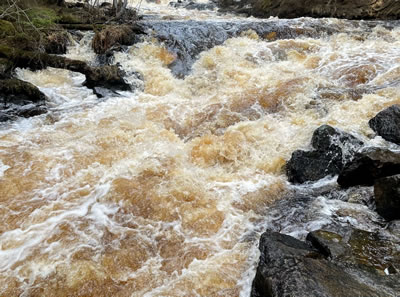
Water is a significant symbol in many cultures. We cannot live without water. Water is life. Indeed, in the Catholic and Christian Churches, we enter into new, everlasting life through water baptism. But water can also be a curse. Too little of it can have dire consequences. Too much of it can drown you. However, sometimes, the blessing comes through what appears to be a curse. Let me tell you a story that might illustrate this.
Some years ago, I and took a cheap flight to Marrakesh in Morocco, North Africa, intending to do a 14-day trek from hostel to hostel, from the Mediterranean coast, over the Atlas Mountains, to the Sahara Desert. The hostels were set up by the French during colonial times. Everything was going perfectly until I passed the watershed and entered a very arid region.
One day, as the sun bore down relentlessly, I was desperate for relief — some water — and God answered my prayers. It began to rain. I refreshed myself, filled my canteen, and marched on with renewed vigor. But the rain kept coming, growing heavier. I started to pray, “Thank you, God, that’s enough. Don’t overdo it — enough is enough.” Yet, God didn’t seem to listen to my prayers.
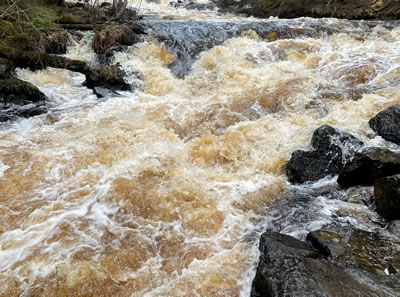
Finally, I reached the river I needed to cross — supposedly via steppingstones. But the stones were completely submerged, and the stream had turned into a raging torrent. There was no way to cross. I waited as night fell and dusk approached. I thought, “What am I going to do?” The only refuge I could find was a sheepfold — a small compound where sheep were kept. I had no choice but to hunker down under a small awning that offered some protection from the rain, surrounded by sheep. Soon, who should appear at the end of the sheepfold, but a shepherd dressed in traditional North African mountain robes. It was like stepping into a story from the Book of Genesis. He was surprised to see me, and I was surprised to see him.
Communication was difficult. I did not speak Arabic or Berber. He spoke no English, but with sign language and some broken French, we managed to understand each other. I explained my problem. He beckoned me to follow him downhill and pointed to a building across the river — obviously his home.
I thought, “That’s wonderful,” but realized we were both stranded on this side of the river; we might have to sleep with the sheep tonight. Then he beckoned me further down, and from beneath a pile of stones, he drew out a plank. He had clearly prepared for this situation before. We used it as a makeshift bridge to cross the raging torrent.
I tried to continue my journey, but he kept signaling and then led me to his house. There, he introduced me to his wife and sat me down on the floor. After a while, his wife brought a meal, which was delicious. Later, he showed me to an alcove with a blanket and invited me to spend the night in his home.
The next morning, the sun was shining. We had breakfast, and he saw me off with heartfelt gratitude. I also expressed my thanks — both to him and to God — because I had completed the tasks set before me by the Columban missionaries. I had engaged in cross-cultural mission work, operated on the margins, participated in interfaith dialogue, and the Good Shepherd had been with me — the Lamb of God.
So, you see, what initially seemed to be a curse of water turned out to be a blessing. I see this as a metaphor for life. Many times, we feel like we’re walking through a valley of darkness or torrential rain, but we must keep faith because who knows? Out of that darkness and rain, God may send a shepherd, build a bridge, offer hospitality, and lead us into a bright, clear new dawn.
Columban Fr. John Boles lives and works in Britain.